01
Business System Integration
We understand ERP, inventory, order, warehouse, and operational systems, so camera results can be compared with real business records instead of only displaying footage.
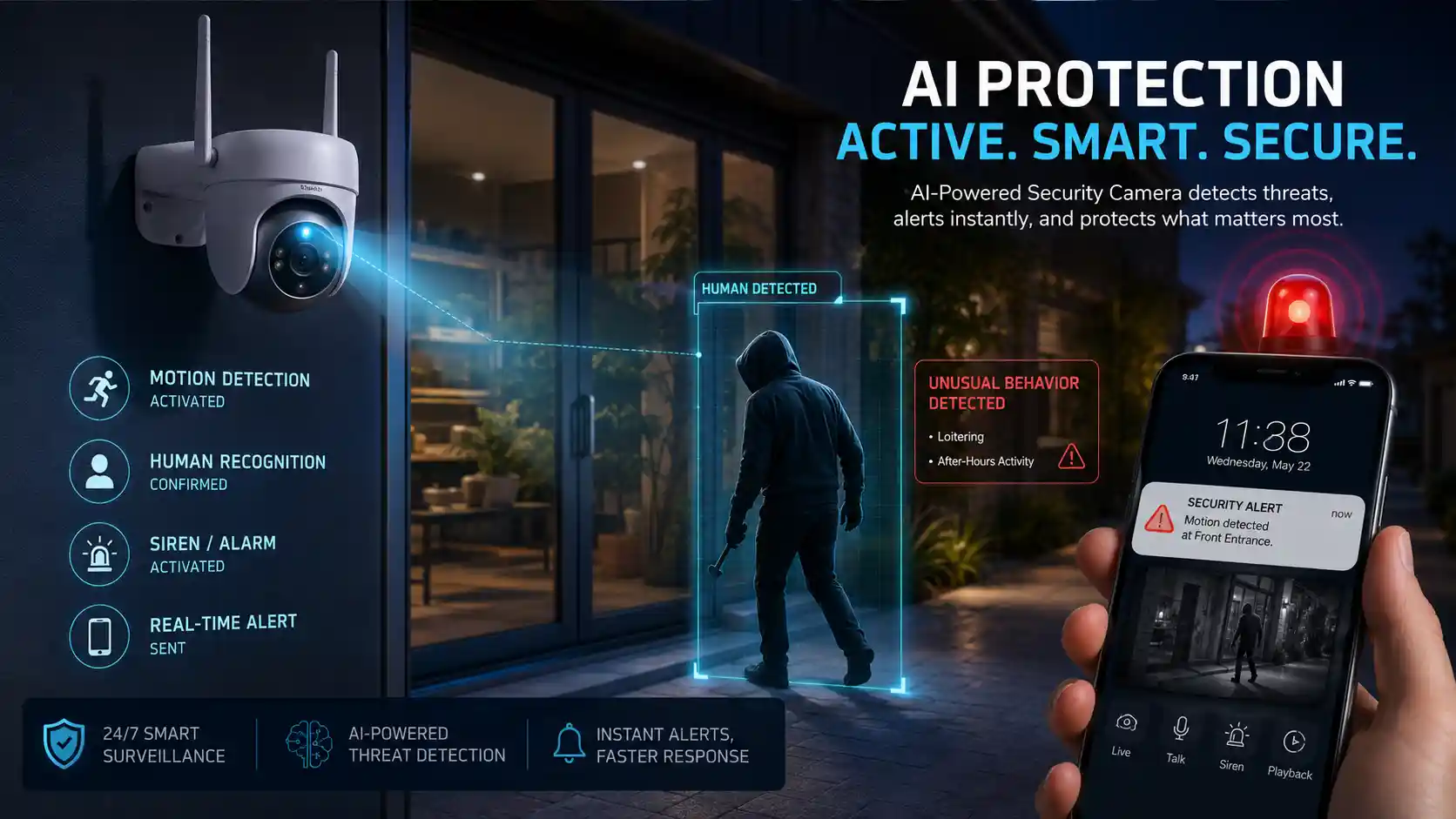
An AI-powered monitoring platform that connects real-world camera data with ERP records, helping companies detect inventory gaps, safety risks, abnormal operations, and security issues earlier.
The system combines camera streams, image recognition, AI visual analysis, ERP API integration, comparison rules, automatic alerts, and administrator review into one practical business monitoring workflow.
We are Flash Coding, a Toronto-based software and AI development team focused on practical business automation. We build systems that connect websites, internal platforms, ERP software, AI tools, and real operational workflows for warehouses, e-commerce, logistics, construction, restaurants, education, and other business environments.
Four practical capabilities make this project realistic and business-ready.
We understand ERP, inventory, order, warehouse, and operational systems, so camera results can be compared with real business records instead of only displaying footage.
We combine object detection, OCR, AI image reading, rule engines, and automated reporting to turn raw visual data into structured business information.
The platform is shaped around receiving, shipping, inventory checking, safety inspection, access monitoring, equipment reading, and exception handling.
Every company has different ERP fields, camera locations, warehouse layouts, alert rules, and approval processes. The system can be configured around the real operation.
Many companies already have cameras, but most cameras only record what happened. They do not understand the business meaning behind the video.
Traditional CCTV systems store footage, but they cannot automatically check whether goods, people, vehicles, or equipment match company records.
Inventory, shipping, receiving, and equipment records can become inaccurate when manual work is delayed, skipped, or entered incorrectly.
Missing goods, incorrect shipments, unauthorized access, unsafe behaviour, and abnormal equipment status are often discovered after the damage has happened.
Staff may need to review footage, count items, compare documents, and write reports manually, which is time-consuming and inconsistent.
An AI camera monitoring platform that reads the site image, compares it with ERP data, and sends alerts when differences or risks are detected.
Identify people, vehicles, boxes, pallets, products, labels, shelves, safety equipment, abnormal behaviour, smoke, fire, water leakage, and visible equipment status.
For complex scenes, AI generates structured findings such as camera location, detected issue, visible evidence, and suggested action for staff review.
Retrieve inventory quantity, warehouse location, inbound orders, outbound orders, purchase orders, sales orders, production orders, equipment records, and SKU data.
Configurable rules decide whether a difference is acceptable or needs attention, with severity levels such as Low, Medium, High, and Critical.
Each alert can include type, location, event time, AI result, ERP comparison, difference value, severity, screenshot evidence, explanation, and status.
Responsible administrators receive email alerts with the event summary, camera ID, ERP quantity, AI detected quantity, difference, and next review step.
Reduce inventory differences.
Compare stock, shelf status, receiving, and shipping activity with ERP records.
See multi-site exceptions faster.
Receive structured alerts, exception reports, and daily operational summaries.
Improve accountability.
Turn passive surveillance cameras into active business monitoring tools.
Detect unsafe behaviour earlier.
Monitor PPE, restricted areas, abnormal movement, falls, smoke, fire, and equipment warnings.
Connect cameras with existing systems.
Use APIs to compare AI recognition with ERP, WMS, inventory, order, and equipment records.
AI identifies products, boxes, pallets, and shelf status, then compares the result with ERP inventory records.
AI checks whether loaded or unloaded goods match purchase orders, sales orders, or delivery orders.
AI detects people entering sensitive areas and compares the event with schedules or access permissions.
AI checks whether workers are wearing helmets, reflective vests, or other required safety equipment.
AI reads screens, warning lights, gauges, or visible abnormal conditions and generates alerts.
The system summarizes daily alerts, camera activity, unresolved issues, and confirmed problems.
Administrators can review screenshots, check AI results, confirm whether an alert is correct, assign follow-up, and mark the case as resolved.
A phased delivery model that starts with practical recognition and grows into deeper ERP-linked monitoring.
Confirm camera locations, ERP fields, operational scenarios, alert rules, and administrator workflows.
Connect camera capture, build AI recognition flows, integrate ERP APIs, and define comparison data models.
Build difference rules, severity settings, alert reports, email notifications, and administrator review pages.
Run controlled validation on selected cameras and scenarios, tune recognition thresholds, and confirm report accuracy.
Add more locations, richer reports, stronger model tuning, safety modules, and multi-site operational summaries.